.png)
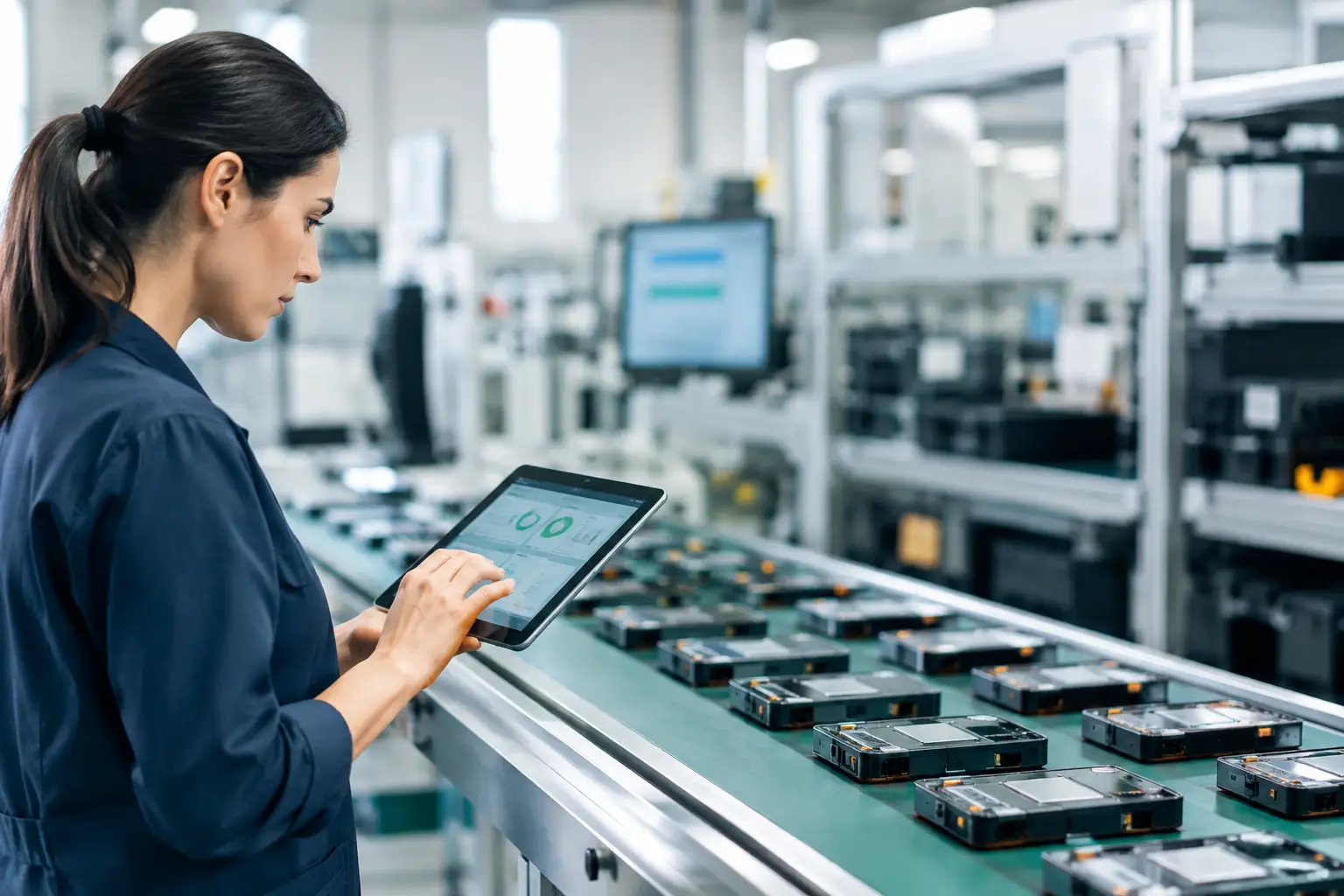
How to Scale Device Production Without Losing Control
A prototype that works on an engineer’s bench is not yet a production-ready device. The real challenge in how to scale device production is preserving product performance while increasing output, controlling cost, and managing the many variables that appear once a device is built repeatedly. For electronics companies, the transition from a successful pilot to stable serial production is where technical decisions become operational decisions.
READ MORE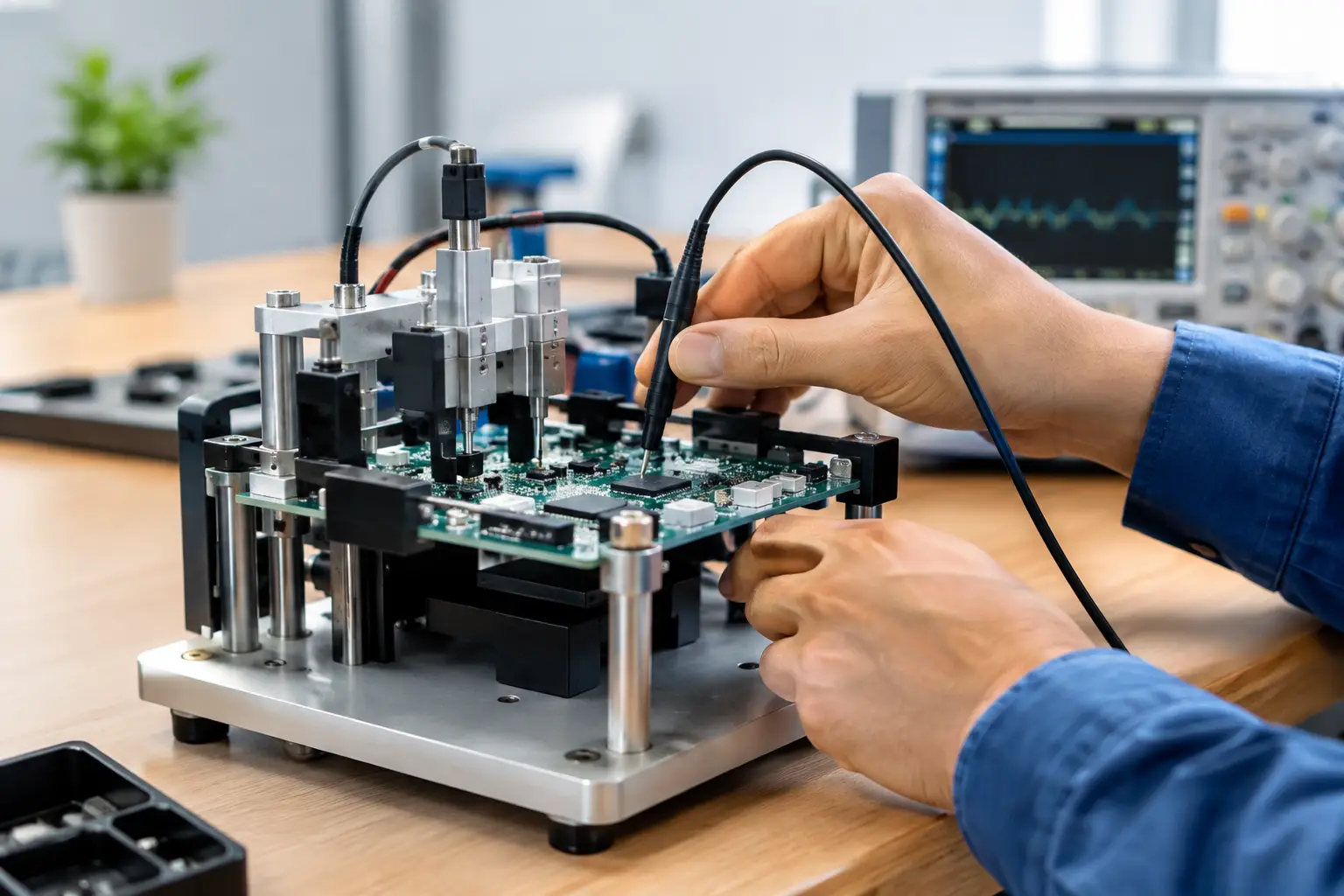
How to Design Test Fixtures for Electronics
A test fixture can be the difference between a controlled production process and an expensive troubleshooting loop. When an assembled PCB reaches end-of-line testing, the fixture must make consistent electrical contact, run the correct checks, protect both the operator and the product, and record a result that can be traced later. Learning how to design test fixtures therefore starts with a production question, not a mechanical one: what failures must be detected before a unit leaves the factory?
READ MORE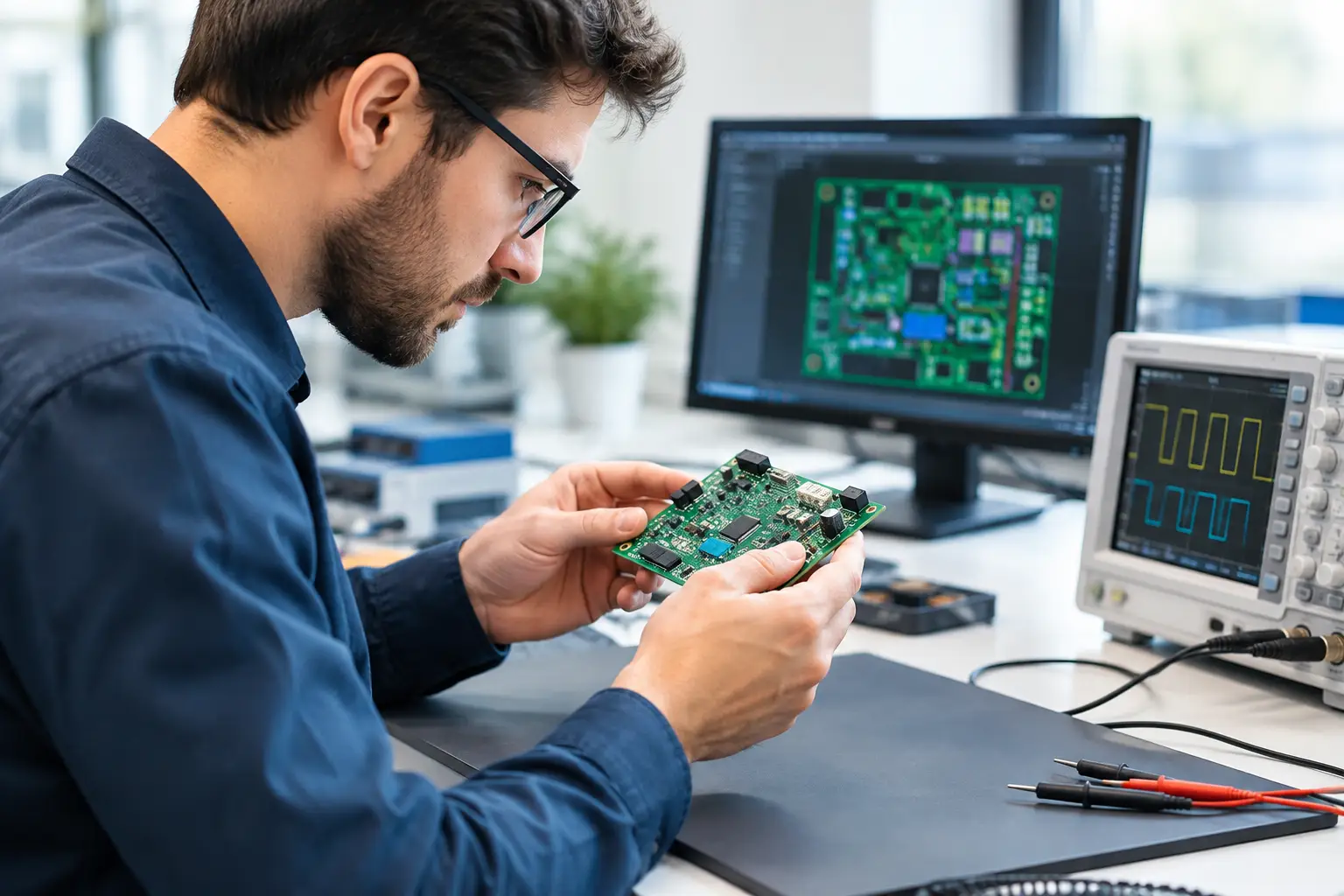
Hardware Design Verification Before Production
A prototype can power up on the bench and still fail the moment it meets its real operating conditions, production process, or supply chain. That gap is where hardware design verification earns its place. It turns a promising circuit into an engineered product with evidence behind its performance, safety, manufacturability, and repeatability.
READ MORE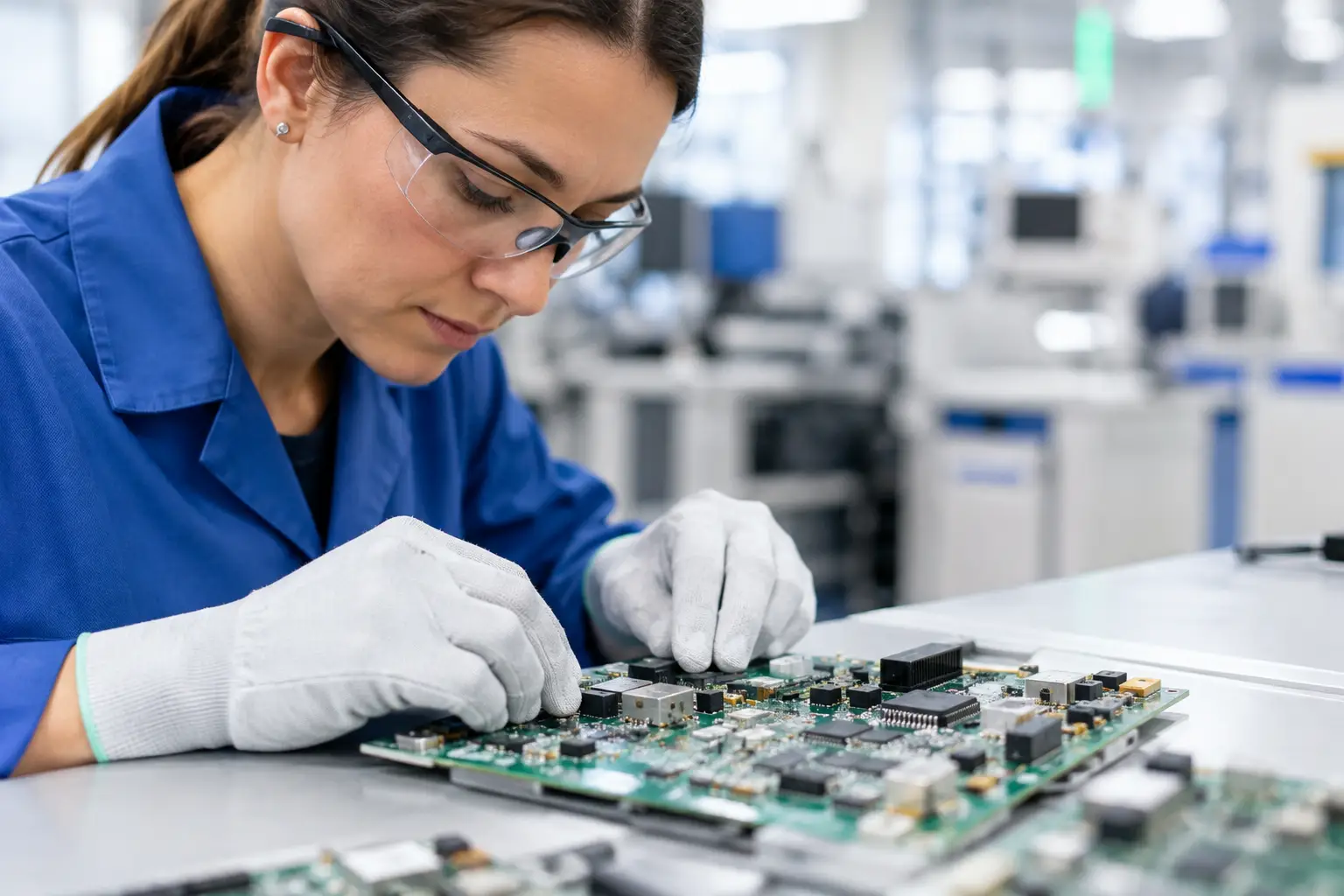
An Electronics Production Risk Checklist for Scale
A prototype can work perfectly on the bench and still fail as a production product. A substituted component, an untestable firmware state, an unclear assembly instruction, or a missing traceability record can turn a promising launch into costly rework. An electronics production risk checklist gives product teams a practical way to expose these issues before they reach the line.
READ MORE