.png)
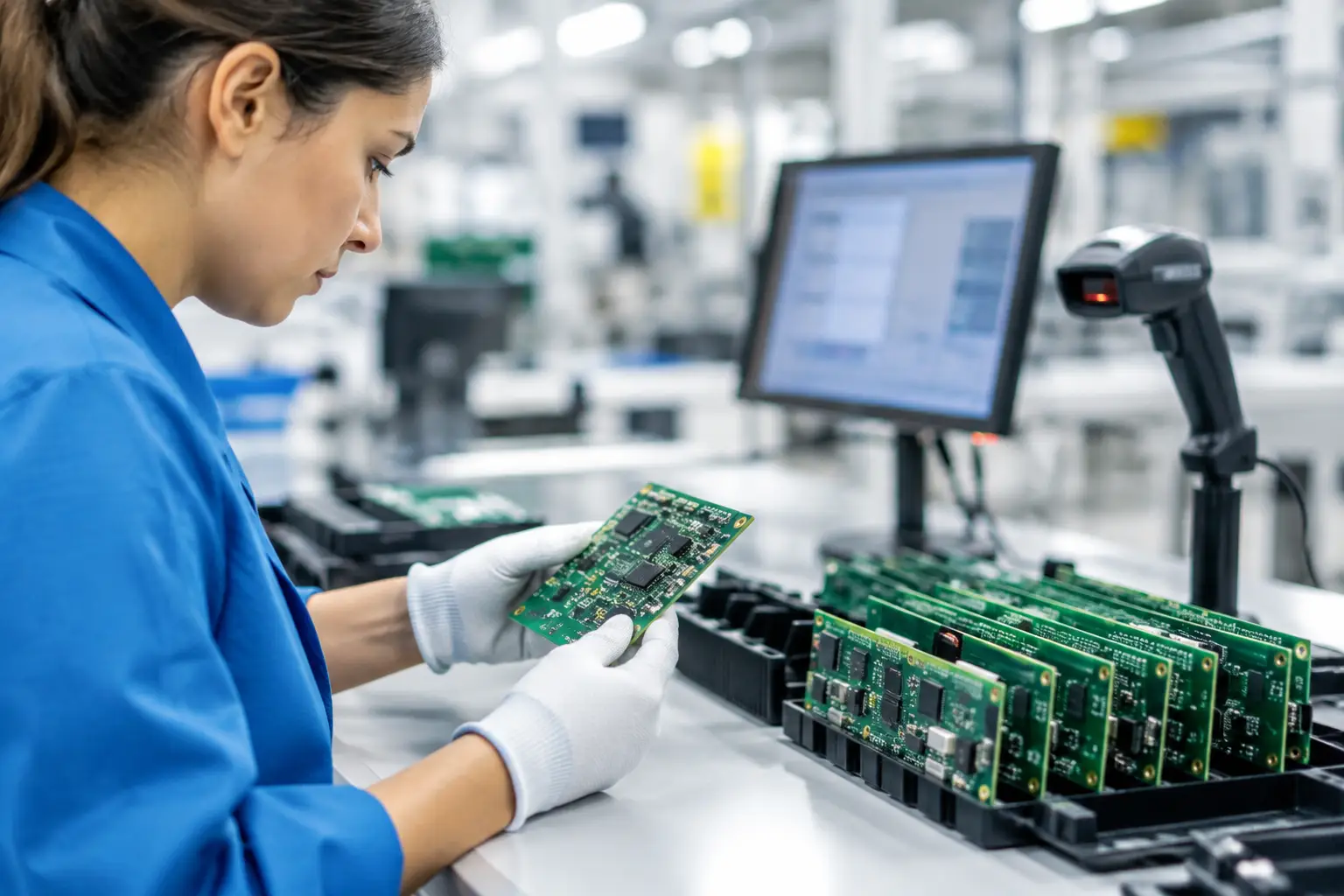
A field failure rarely starts with the final device. It may originate in a substituted component, a soldering profile that drifted during one shift, an incorrect firmware revision, or a batch of parts that passed incoming inspection but later proved inconsistent. Knowing how to implement device traceability means being able to answer those questions with evidence, without stopping an entire production line or recalling unaffected products.
For electronics manufacturers and product owners, traceability is not simply a serial-number label. It is the controlled connection between a shipped device and its material history, production route, test results, software configuration, packaging record and, where relevant, service activity. Built well, it reduces operational risk while giving engineering, quality and procurement teams a common factual record.
Start with the decisions traceability must support
The right level of traceability depends on the product, its market and the consequences of failure. A connected medical-adjacent device, industrial control unit or safety-relevant product normally requires more detailed records than a simple consumer accessory. However, collecting every available data point can create cost and complexity without improving control.
Begin by defining the questions your system must answer. If a component supplier reports a suspect date code, can you identify every affected finished device? If a customer returns a unit, can you see its PCB revision, firmware version, process history and final test data? If a test limit changes, can you determine which devices were tested under the previous specification?
These decisions establish the traceability scope. For many electronic products, the minimum useful scope connects finished-device serial numbers to PCB serial numbers, production orders, critical component lots, assembly process records, programming data, functional test results and shipment information. Higher-risk applications may also require operator identification, individual placement records, environmental data, calibration status and repair history.
The principle is simple: record data when it enables a meaningful containment, root-cause or lifecycle decision. Do not make operators enter information merely because it might be useful one day.
How to implement device traceability: define the data model
Traceability fails when identifiers are inconsistent. Before selecting scanners, software or labels, define how each object will be identified and related to the next.
A finished device needs a unique serial number that remains with it throughout its life. The PCB assembly should have its own identifier, particularly when the device contains more than one board or when boards can be repaired, reworked or assembled into different configurations. Materials need supplier lot, date-code or internal batch references. Production orders, test stations, firmware releases and packaging units also need controlled identifiers.
The data model should describe the relationships clearly. One device serial number may contain one PCB serial number, while one PCB serial number may consume components from several lots. One component lot may appear in thousands of boards. A single device may be programmed more than once during rework, so the system must preserve the final approved software version and retain the earlier event history.
This is often called product genealogy. It allows teams to move in both directions: from a device to every relevant material and process record, or from a material lot to all potentially affected devices. Both directions matter. The first supports diagnosis and service. The second supports rapid containment.
Choose identifiers that work on the factory floor
A serial number can be simple, but it must be unique, readable and durable enough for its intended lifecycle. Human-readable text supports manual checks. A 2D code, such as a Data Matrix code, supports fast and reliable scanning in production. Depending on housing material and product requirements, the code may be printed on a label, laser-marked, engraved or stored electronically with a matching external identifier.
Placement matters. A label hidden beneath a cover may be acceptable during assembly but unhelpful for returns and field service. Conversely, an external label may be exposed to abrasion, cleaning agents or heat. Validate the marking method against the real operating environment, not only a sample unit on a desk.
For PCB assemblies, ensure the identifier remains accessible after assembly and does not interfere with test fixtures, conformal coating, heat dissipation or regulatory markings. The best identifier is one that can be scanned correctly at every planned control point.
Build traceability into the production route
Traceability should follow the actual manufacturing flow, from incoming materials to dispatch. It works best when scan points are embedded in normal work rather than added as a separate administrative task.
At incoming inspection, record the purchase order, supplier, manufacturer part number, lot or date code, quantity received and inspection status for critical materials. This creates the first link between procurement and production. For components with supply-chain sensitivity, retain supporting documentation such as certificates, inspection records or approved substitution decisions alongside the material record.
During kitting and assembly, scan the material lots issued to the production order. At device level, associate the PCB and device serial numbers when mechanical assembly takes place. If the product uses replaceable modules, batteries, displays or communication units, determine whether these need individual serial-level tracking or whether lot-level control is sufficient. The answer depends on risk, cost and service strategy.
Programming and testing are essential traceability events, not just quality gates. Record the firmware version, programming result, test software version, test fixture or station identification, result values where relevant, and pass or fail status. A simple pass record may be enough for lower-risk products. For industrial or regulated equipment, retaining measured values can reveal gradual process changes before they become failures.
After final approval, connect the device record to packaging and shipment data. This gives customer service and operations teams a reliable way to identify what was sent, when it was sent and which configuration reached the customer. If devices are packed in cartons or pallets, parent-child packaging relationships can also speed up logistics and targeted field actions.
Integrate quality rules, not only data collection
Data has limited value if the system accepts impossible combinations. Configure controls that prevent a device from passing a stage when an approved material, firmware or test result is missing. For example, a unit should not receive final release if the programmed software revision does not match the released bill of materials and product configuration.
Exception handling deserves equal attention. Operators need a clear path for a failed test, damaged label, component substitution, rework operation or scrapped assembly. Deleting the original record may make the database look tidy, but it removes the evidence needed for quality investigations. Instead, keep the event history and record the disposition, responsible approval and resulting configuration.
This is where traceability becomes part of a disciplined quality system. It supports nonconformance handling, corrective actions and supplier discussions with specific facts rather than assumptions.
Select systems that match production scale
A prototype team may begin with controlled spreadsheets, barcode labels and structured test files. That can be appropriate for low volumes if responsibilities are clear and records are protected from uncontrolled edits. As volumes increase, manual reconciliation becomes a risk in itself.
For serial production, traceability is typically connected across enterprise resource planning, manufacturing execution, test systems, warehouse control and service records. Full integration is valuable, but it should be phased. Start with the points where a missing link would have the highest commercial or quality impact: critical component lots, device serialization, firmware programming, final test and shipping.
The practical test is retrieval time. Ask an independent user to select a random device serial number and retrieve its complete history. Then select a material lot and identify all affected devices. If either exercise requires multiple people, informal knowledge or hours of spreadsheet work, the process is not yet ready for a fast containment action.
A capable EMS partner can help define this architecture early, before design choices make marking, scanning or test access difficult. At Hemargroup, engineering, production, procurement and lifecycle activities can be coordinated around the same product record, helping traceability remain connected as a product moves from prototype to series production and after-sales support.
Validate, train and maintain the process
Traceability needs validation like any other production process. Run controlled exercises before launch: simulate a supplier alert, a failed final test trend and a field return. Check whether the records identify the right population, whether unaffected units can be excluded confidently, and whether the team knows who approves each action.
Training should focus on why each scan or record matters in the next department. An operator who understands that a missed lot scan could turn a small supplier issue into a broad recall is more likely to follow the process consistently. Work instructions should be visual, concise and available at the station where the action occurs.
Finally, monitor record completeness and scan failures. Labels fade, scanners lose configuration, test software changes and new product variants introduce exceptions. Periodic audits should compare the physical product, the bill of materials, test records and shipment data. This protects traceability from becoming a process that exists on paper but cannot support a real investigation.
The most useful traceability system is not the one that captures the most data. It is the one that lets your team isolate a problem quickly, prove what happened and keep good products moving with confidence.