.png)
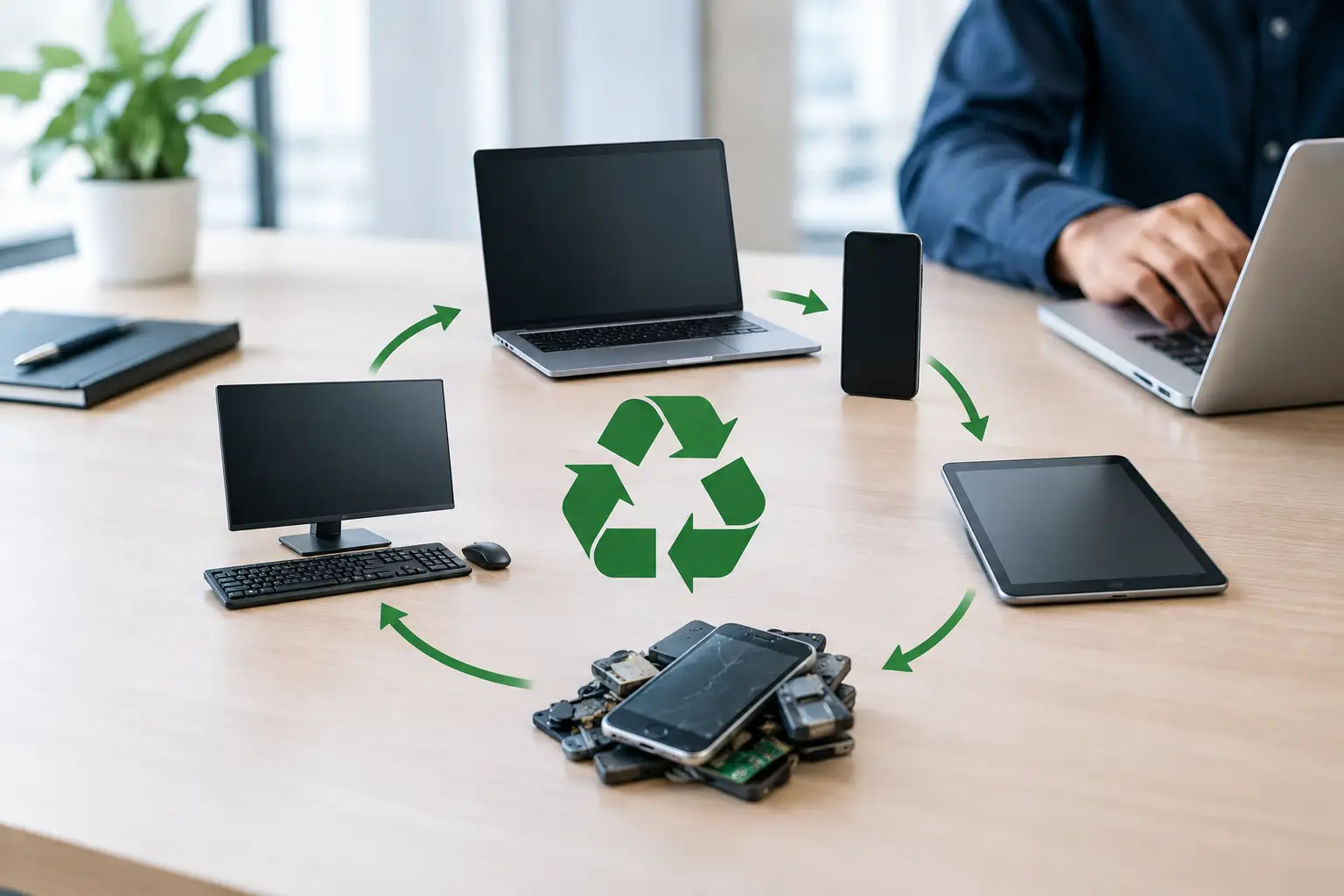
A product can pass functional prototype testing and still fail commercially when a key component becomes unavailable, a production change is undocumented, or repairs cannot be completed in the field. This device lifecycle management guide explains how to manage those risks as one connected process, from the first technical decision to the final service action.
For industrial electronics, IoT products and specialist devices, lifecycle management is not an administrative layer added after development. It is the operational discipline that connects engineering, procurement, production, quality, logistics and after-sales support. When these functions work from the same product data and change rules, teams can respond faster without losing control.
What device lifecycle management covers
Device lifecycle management is the structured control of a product throughout its market life. It covers design choices, bills of materials, approved suppliers, production documentation, test procedures, traceability, inventory, repairs, product changes and end-of-life planning.
The aim is straightforward: deliver the same intended product repeatedly, support it responsibly and manage change before it becomes disruption. The detail required depends on the device. A low-volume laboratory instrument may need long-term repairability and documented component alternatives, while a high-volume connected product may place greater emphasis on production capacity, programming control and logistics. Both need clear ownership.
A practical lifecycle plan should answer several questions early. Which components present availability or obsolescence risk? What documentation is required to reproduce the product? How will serial numbers, software versions and test records be tracked? Who can approve a design, supplier or process change? What happens when a customer returns a unit years after delivery?
Start with lifecycle decisions in engineering
The most valuable lifecycle work often happens before the first PCB is ordered. During hardware and software engineering, teams should select components based on more than unit price or immediate availability. Manufacturer status, lead times, second-source options, package maturity, qualification requirements and expected product life all matter.
A bill of materials should therefore be managed as a living technical and supply-chain document. Each part needs a clear manufacturer part number, approved alternatives where appropriate, sourcing status and revision history. Generic descriptions such as “10 kOhm resistor” are not sufficient when a product must be manufactured consistently across multiple batches.
Design for manufacturability and testability also belong at this stage. Engineers should define accessible test points, programming interfaces, fixture requirements and measurable acceptance criteria before design release. If a unit cannot be tested efficiently in production, defects are more likely to move downstream into installation, customer support or returns.
Software requires the same discipline. Firmware versions, programming parameters, calibration data and configuration files must be controlled against the relevant hardware revision. A functioning device is not necessarily a traceable device if no one can confirm which software was loaded, when it was loaded and under which test conditions it passed.
Convert a prototype into a controlled product
A prototype proves that a concept can work. Industrialisation proves that it can be built, tested and serviced repeatedly. The transition between the two is where many projects lose time because informal engineering knowledge has not yet become production-ready documentation.
Before series production, establish a controlled product data package. It normally includes released schematics, PCB data, bills of materials, assembly drawings, mechanical files, approved work instructions, programming instructions, test specifications, packaging requirements and quality criteria. The exact package will vary, but its purpose does not: production should not need to interpret unfinished development information.
Pilot batches and 0-series production are especially useful because they expose practical issues while changes remain manageable. A component may fit electrically but create assembly risk. A test sequence may be technically valid but too slow for the planned output. Packaging may protect the device in the factory but not during transport. These findings should feed back into the released documentation, not remain as knowledge held by individual technicians.
Change control becomes essential at this point. Every approved modification should state what changed, why it changed, which product revisions are affected, what stock requires action and whether requalification is needed. Minor changes can have major consequences when they affect safety, electromagnetic compatibility, programming or a customer interface.
Manage procurement as a product-risk function
Component sourcing is not separate from lifecycle management. It is one of its most visible pressure points. Lead-time changes, allocation, counterfeit risk and manufacturer end-of-life notices can quickly affect delivery commitments, particularly for products with long service lives.
Procurement teams need timely access to engineering-approved alternatives and clear rules for substitutions. Replacing a component purely because it is available may change electrical performance, manufacturability or regulatory status. Conversely, waiting for a full redesign when a qualified alternative exists can create avoidable delays.
A useful approach is to review the bill of materials at defined intervals, with closer monitoring for high-risk components. Critical parts may justify buffer stock, multi-source strategies or redesign planning well before an official discontinuation notice. The right action depends on annual volume, customer commitments, storage conditions, cash exposure and the cost of a future redesign.
Build traceability into production and quality
Traceability gives a team the ability to answer precise questions quickly. Which components were used in this serial-numbered device? Which production batch and test station processed it? Which firmware version was programmed? Were there any rework actions? For regulated, industrial or safety-relevant applications, these answers may be mandatory. For every other product, they are still highly valuable when investigating a field issue.
Traceability should be designed around the actual risk profile. Full component-level traceability may be justified for selected critical parts, while lot-level tracking may be sufficient elsewhere. Excessive data collection can slow operations without improving decisions, so the goal is relevant evidence, not paperwork for its own sake.
Quality control should connect incoming inspection, in-process checks, functional testing and final release. When a recurring failure appears, teams need a defined route from symptom to root cause, corrective action and verification. Production feedback is also valuable engineering input: recurring assembly difficulties often indicate a design or documentation issue rather than an operator issue.
Plan service, repairs and product changes before launch
After-sales support is part of the product lifecycle, not an exception process. Customers expect a clear response when a device fails, requires a firmware update or needs a replacement. That response is faster and more reliable when repair procedures, spare-parts policy and diagnostic information were considered during development.
For repairable products, retain sufficient technical records to identify the unit configuration and define what can be repaired at board level, device level or through replacement. Service teams need access to approved parts, test methods and controlled software. They also need a route for feeding recurring field failures back to engineering and quality.
Product updates deserve the same scrutiny as physical revisions. A firmware update may solve a known issue, but it can also introduce compatibility or validation requirements. Define how updates are released, tested, documented and applied. For connected devices, security maintenance may extend the lifecycle responsibilities well beyond the initial shipment date.
Prepare for end of life without creating a last-minute crisis
End of life begins as a planning topic long before the final manufacturing order. A manufacturer discontinuation, declining sales volume, a regulation change or a successor product can all trigger the decision. The key is to decide whether to place a last-time buy, redesign, extend service stock or communicate a managed phase-out.
A controlled phase-out protects both the manufacturer and the customer. Confirm final order dates, service commitments, spare-part availability, documentation retention and repair policy. Where relevant, plan for compliant disposal, recovery or recycling of electronics and batteries. The best end-of-life process leaves customers with clear expectations rather than an unexpected support gap.
Put clear ownership around the lifecycle
Lifecycle management works when responsibilities are explicit. Engineering owns technical definition and validation. Procurement manages supply risk and approved sourcing. Production owns repeatable execution. Quality governs evidence, nonconformities and corrective actions. Project coordination keeps decisions, schedules and customer communication aligned.
For many businesses, coordinating these disciplines across separate suppliers creates avoidable handovers and unclear accountability. An integrated partner can reduce that friction by connecting engineering, industrialisation, electronic assembly, testing, warehousing, logistics and after-sales activity within one controlled workflow. Hemargroup supports this model from early prototypes through production scaling, service and lifecycle coordination.
The practical test is simple: when a component is discontinued or a field issue appears, can the responsible team identify the affected devices, assess the technical options and make a documented decision quickly? If the answer is no, the lifecycle process needs attention before the next disruption arrives.
A well-managed device lifecycle gives teams room to react without improvising. That is what protects delivery performance, product quality and customer confidence over the years a device is expected to remain in service.